Exploring a development opportunity or need additional support for an active programme? DASTPO provides local insight, advisory and practical implementation support for governments, NGOs and international organisations in Jamaica and the Caribbean.
His work with major development partners—including FCDO, USAID and Global Affairs Canada—spans One Health, COVID-19 response, climate-change legislation, education, youth development and institutional strengthening.
High-level government coordinationPublic–private stakeholder managementStrategic planningBudgeting & business development
How DASTPO can help
Development support, from planning to delivery.
From scoping and local advice to programme delivery, stakeholder coordination and funding support, these services turn our core offers into practical assignments. Drawing on the DASTPO Consortium, we bring together specialist expertise from across the Caribbean to match your programme’s needs. DASTPO can take on an agreed part of the work or provide ongoing support alongside your team.
Before a programme begins
Commission a scoping assignment or seek focused advice on a development issue. DASTPO can help you understand local priorities, map stakeholders, explore partnerships and identify practical next steps.
Take pressure off your team with support for an agreed activity or programme workstream. This can include administrative, financial and procurement support, workshop and venue arrangements, stakeholder coordination, supplier follow-up and progress reporting, all within your organisation’s procedures.
Explore an issue or potential project in Jamaica or the Caribbean before committing to a programme. We bring together local context, evidence and stakeholder perspectives to help you decide where and how to proceed.
What this includes +
Scoping studies, desk research and evidence briefs
Stakeholder mapping and potential-partner identification
Exploratory meetings and local-context advice
Research and consultations to inform programme or policy decisions
Findings, practical recommendations and next steps
Programme Design & Implementation Support
Turn an idea into a workable programme, or assign DASTPO a defined part of an existing project. We provide the planning and coordination capacity needed to keep activities, people and reporting moving.
What this includes +
Project concepts, objectives, activities and workplans
Implementation schedules, responsibilities and progress tracking
Workshop logistics, venues and participant arrangements
Consultant coordination and supplier follow-up
Tender documentation and process coordination within your procedures
Activity reports and coordination of technical reporting
Government & Stakeholder Coordination
Bring government, donors, technical specialists, businesses and communities into a clear process. We support engagement and follow-through so your team can manage relationships and move agreed work forward.
What this includes +
Stakeholder engagement plans and outreach
Government and inter-agency meeting coordination
Consultations and coordination of policy or technical inputs
Meeting briefs, agendas and decision records
Partner responsibilities, action tracking and follow-up
Funding Proposals & Donor Support
Develop a funding proposal or organise the information required for donor-funded work. We help translate a project idea into a clear concept, budget and supporting narrative, and assist with reporting during delivery.
What this includes +
Funding-call review and requirements mapping
Concept notes and funding proposals
Budget preparation and supporting narratives
Coordination of partner inputs and application materials
Donor-reporting schedules and progress updates
Finance, Administration & Procurement Support
We offer financial, administrative and procurement support for programme teams. This includes programme budgeting and financial reporting, grant administration, supplier coordination, procurement records and purchasing. Each assignment is scoped around your needs and agreed responsibilities, with purchasing subject to your approved budgets, procedures and delegated authority.
What this includes +
Programme budgeting, expenditure tracking and financial reporting
Grant administration and supporting financial records
Supplier coordination and procurement records
Purchasing within client-approved budgets, procedures and delegated authority
Discuss your requirements with us so we can confirm the scope, available specialists and responsibilities before an engagement is agreed.
Organisational Support & Donor Readiness
Support NGOs, community organisations and programme teams with practical planning and stronger ways of working. We shape the assignment around the organisation’s priorities, capacity and funding needs.
What this includes +
Organisational and programme planning
Partnership planning and role clarification
Donor-readiness reviews and preparation of supporting information
Practical reporting and coordination tools
Training and implementation guidance tailored to the team
Facilitation & Shared Planning
Create space for partners to work through an issue and agree what happens next. Facilitation can form part of a scoping study, programme, consultation or organisational-support assignment.
What this includes +
Strategic-planning workshops and multi-stakeholder dialogues
Session design, agendas and participant coordination
Facilitation guides and workshop materials
Learning and reflection sessions
Discussion summaries, agreed actions and follow-up plans
These selected projects show the development experience Dervin brings to DASTPO from previous employment and consultancy roles: leading stakeholder coordination, managing donor-funded programmes and supporting institutions and NGOs. Each case study identifies the relevant institutional context.
Most recent experience · WFD · Jamaica
Climate Change Legislation in Jamaica
Leading the coordination behind a national climate legislative framework. Through WFD, Dervin brings together government counterparts, FCDO and legal and policy specialists to support Jamaica’s legislative-development process. His work links comparative research, consultation planning and specialist assignments with preparation of a Concept Note, Legislative Proposal and drafting instructions.
Explore the ProgrammeClose the Programme
Theme
Climate governance & democratic participation
Technical focus
Framework climate change legislation
Donor
FCDO
Implementing entity
Westminster Foundation for Democracy
Dervin’s role
Programme Manager
As Programme Manager with the Westminster Foundation for Democracy (WFD), Dervin leads the programme supporting development of Jamaica’s framework climate change legislation. His role connects government priorities, donor engagement and specialist legal and policy expertise to advance the preparatory work for a national climate legislative framework.
The Task
The Government of Jamaica, through the Ministry of Water, Environment and Climate Change, sought FCDO support for the initial development of a national Framework Climate Change Bill. WFD’s task was to support the preparation of a Concept Note, Legislative Proposal and drafting instructions setting out the proposed law’s purpose, scope and framework, to inform the Government’s next steps in developing the legislation.
Dervin’s leadership
Dervin served as the programme’s focal point between FCDO, WFD and the Ministry, coordinating their priorities and expectations. As WFD’s sole in-country programme manager for this activity, he met repeatedly with the Ministry to clarify its objectives and shaped the programme’s activities and consultant support around those needs.
He coordinated stakeholder identification and consultations, brought together national consultants and international expertise to inform the proposed legislative framework, and led the coordination of a workshop involving more than 60 government stakeholders from across Jamaica.
The outcome
The programme is working towards three preparatory outputs for Jamaica’s proposed climate change legislation: a Concept Note to inform a Cabinet submission and the subsequent development of the legislation; a Legislative Proposal developed by the national consultant, examining international legislative approaches and their relevance to Jamaica; and Drafting Instructions to support the next stages of legislative development.
Dervin’s sustained engagement strengthened his working relationship with the Ministry, which has expressed interest in continuing its collaboration with the team.
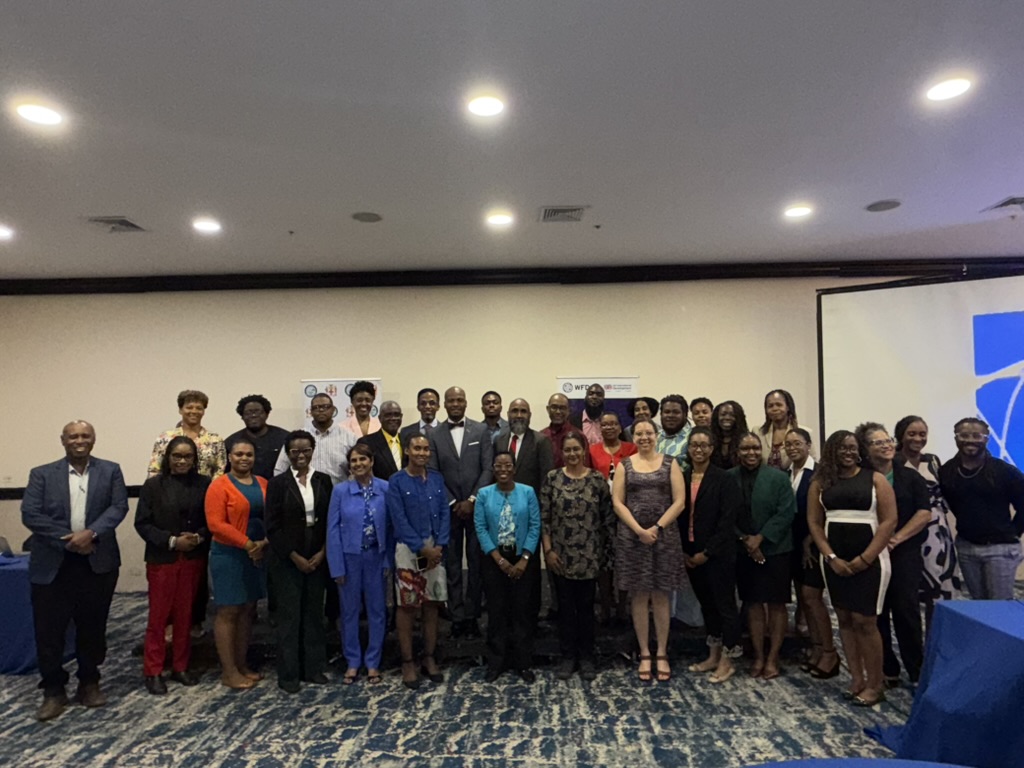
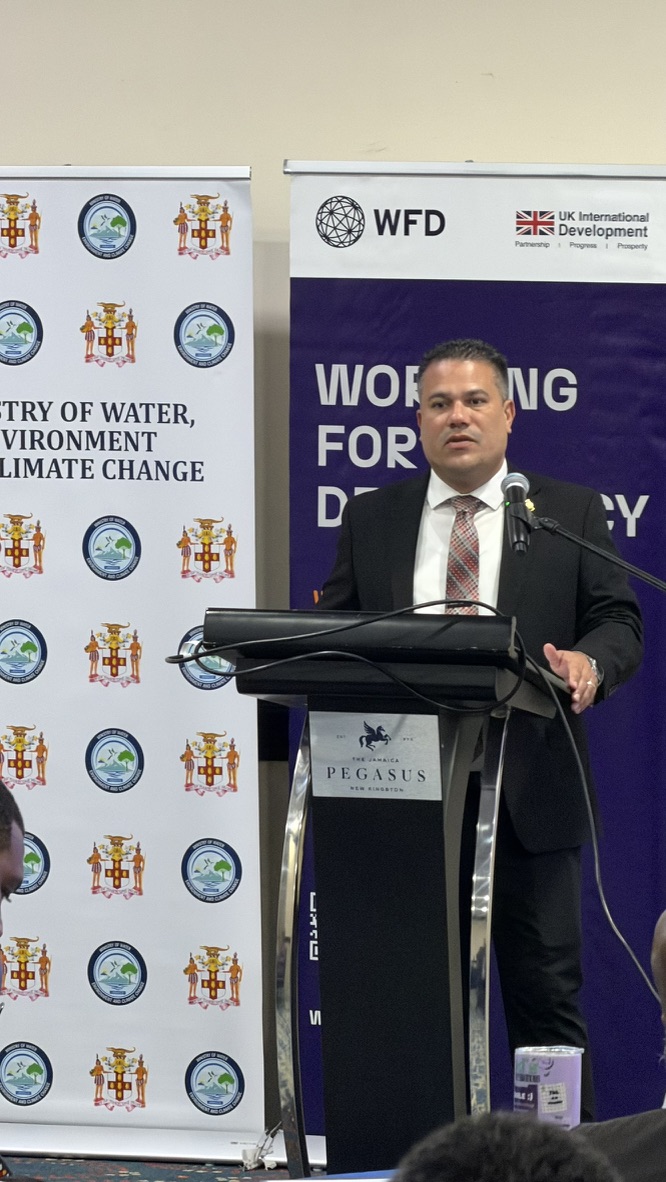
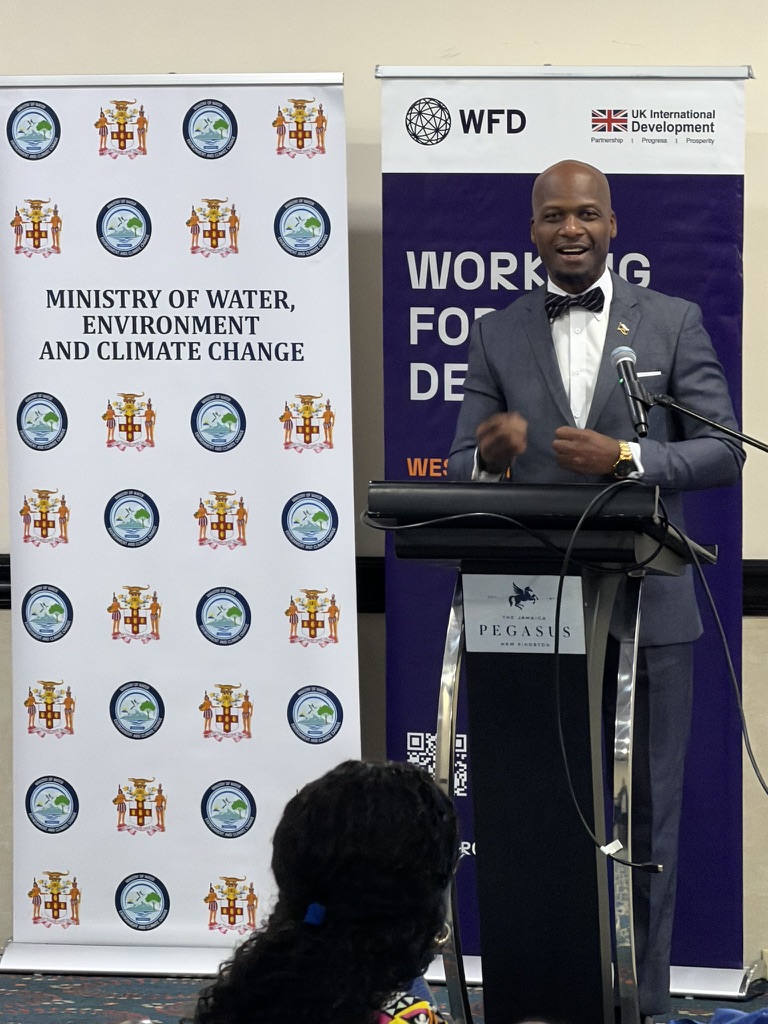
Participants from ministries, departments and agencies (MDAs) gathered for the climate change legislation workshop.Hon. Matthew Samuda, MPMinister of Water, Environment and Climate Change, addressing the workshop.Wayne RobertsonPermanent Secretary, Ministry of Water, Environment and Climate Change, addressing the workshop.
Scoping and local advisory
Through repeated meetings with the Ministry, Dervin clarified its priorities and the support required at the initial stage of legislative development. He used that understanding of the Jamaican context to guide the programme’s approach and connect it with relevant international experience.
Programme design and implementation
Dervin shaped the programme’s activities around the Ministry’s objectives, coordinated national consultants and international expertise, and planned the consultations needed to inform the Concept Note, Legislative Proposal and drafting instructions.
Government and stakeholder coordination
Dervin served as the focal point between FCDO, WFD and the Ministry, coordinating institutional priorities and stakeholder engagement. He identified relevant government stakeholders and led the coordination of a workshop involving more than 60 participants from across the Government of Jamaica.
Procurement support
Dervin led the identification and recruitment of consultants and coordinated venue hire and the engagement of service providers for programme activities, following the applicable FCDO and WFD procurement guidelines.
The value he brings
Dervin connects policy ambition with coordinated programme delivery. He manages specialist inputs, maintains engagement across government and donor counterparts, and turns a complex legislative-development assignment into defined activities and decision points.
This experience demonstrates his capacity to lead technical assistance in an institutional setting—balancing international expertise with national ownership, adapting plans as circumstances change and keeping the work focused on its intended outputs.
The programme supports preparation for climate legislation. The Concept Note, Legislative Proposal and drafting instructions are preparatory outputs, distinct from a Bill being passed or a law taking effect.
Experience gained through Dervin’s role as Programme Manager with the Westminster Foundation for Democracy, working with Jamaica’s Climate Change Branch through FCDO support.
One Health Coordination in Jamaica
Bringing institutions together to advance health security. Through the USAID-funded LHSS Project, Dervin led coordination across human, animal and environmental health, connecting government, technical specialists and development partners. He shaped a multistakeholder workshop and oversaw an assessment to identify priorities, capacity gaps and options for stronger One Health coordination.
Explore the ProgrammeClose the Programme
Theme
Global Health Security
Technical focus
One Health
Donor
USAID
Implementing entity
Abt Global
Project value
US$1.6 million
Through his work with Abt Global on the USAID-funded Local Health System Sustainability (LHSS) Project, Dervin led multisectoral stakeholder coordination to advance Jamaica’s emerging One Health agenda—connecting government priorities, technical expertise and partner relationships to support a more coordinated approach to health security.
His contribution combined programme development, stakeholder leadership and technical oversight, helping translate a complex development priority into practical activities and a clearer pathway for collaboration.
The challenge
Jamaica already had institutions working across human, animal and environmental health. The challenge was connecting those efforts through a shared approach, with clearer arrangements for collaboration, responsibilities and collective action.
The country’s Pandemic Fund application created an opportunity to advance that agenda. But a funding proposal alone could not establish the relationships, shared understanding and institutional ownership needed to carry it forward.
Dervin’s role
Dervin led coordination across the project’s stakeholders, working with the Ministry of Health and Wellness as the government lead and engaging counterparts across agriculture and environment, USAID, PAHO, technical specialists, civil society and private-sector partners.
His responsibility went beyond organising meetings. He connected institutions with different mandates, shaped opportunities for their input and translated discussions into programme activities, technical assignments and next steps.
Alongside this coordination role, he developed workplans, shaped consultant assignments and prepared materials that helped different institutions understand their contribution to a shared national effort.
Turning ambition into a practical programme
Programme design and implementation
Dervin helped translate government priorities into a structured workplan linking assessment, stakeholder engagement and recommendations for governance. The approach focused on understanding existing capacities before proposing new arrangements—building on Jamaica’s institutions rather than assuming an external model would fit.
Government and stakeholder coordination
He coordinated relationships across government and partner organisations, developing sector-specific briefs, correspondence and leadership talking points to explain the relevance of One Health to different audiences. This connected a shared health-security objective with each institution’s responsibilities and priorities.
He helped articulate the role of civil society and private-sector organisations in preparedness, risk communication and community engagement, including the need to move beyond isolated activities towards more consistent arrangements for participation.
Scoping and local advisory
His programme-development work framed assessments around the questions government needed to answer: what coordination mechanisms already existed, where the gaps were, which workforce capabilities were needed and how findings could inform policy and governance options.
Stakeholder leadership
Bringing stakeholders together: the One Health workshop
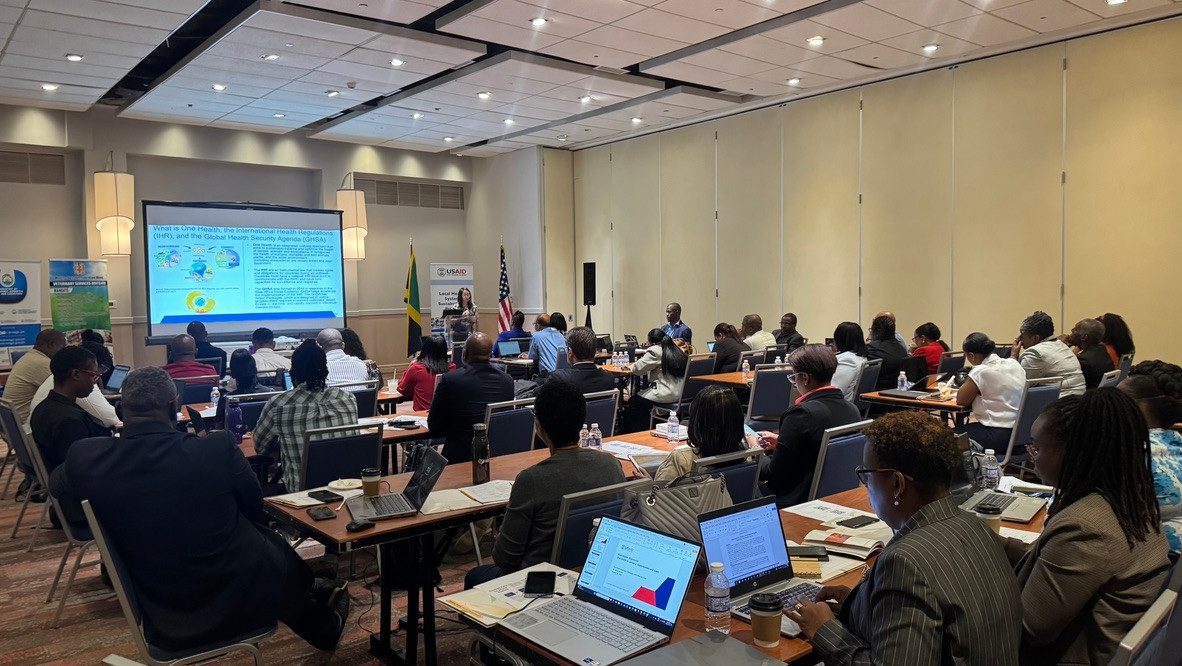
The multistakeholder One Health Strategic Visioning Workshop was a major component of this work. It brought together perspectives across human, animal and environmental health, alongside stakeholders from academia, civil society, the private sector and development partners.
Dervin led stakeholder coordination for the workshop and shaped its preparation, concept and agenda. He designed the process to move beyond awareness-raising: connecting technical understanding with discussion of existing capacities, identification of priorities and exploration of a shared direction for One Health in Jamaica.
His work included tailored engagement with participating institutions, invitations, briefing materials and leadership talking points. These preparations helped different sectors understand why their involvement mattered and what they could contribute.
The resulting workshop report documented priority areas, objectives and potential governance arrangements for a Jamaican One Health programme. It also identified next steps, including continued engagement towards a multisectoral technical working group to guide development of a One Health concept paper.
The workshop’s value was not simply bringing people into a room. It connected institutional perspectives and translated them into documented priorities for further action.
Technical oversight
Overseeing the evidence: the One Health assessment
Alongside the workshop, Dervin oversaw the development of a One Health assessment report to examine Jamaica’s existing capacities and identify gaps relevant to stronger coordination.
His involvement began with shaping the assignment’s scope, consultant responsibilities and expected outputs. He participated in consultant selection, focusing particularly on understanding the Jamaican context, relevant stakeholders and the realities of navigating government systems.
Following inception, he coordinated engagement between the consultant, the Ministry of Health and Wellness and global health-security specialists to support the methodology, clarify technical questions and facilitate stakeholder connections.
The assessment’s scope covered policy and governance, surveillance, laboratory capacities, workforce development and community engagement. Its purpose was to provide an evidence base for decisions about One Health coordination and implementation.
Dervin connected specialist technical work with the wider programme, ensuring the assessment was developed in dialogue with relevant partners and focused on the questions the initiative needed to address.
The outcome
As part of the work, a signing ceremony brought together the three participating ministries in a commitment to advance One Health in Jamaica. The workshop’s discussions and guidance informed the development of an assessment of Jamaica’s One Health positioning. That assessment has since informed One Health coordination within the Ministry of Health and Wellness.
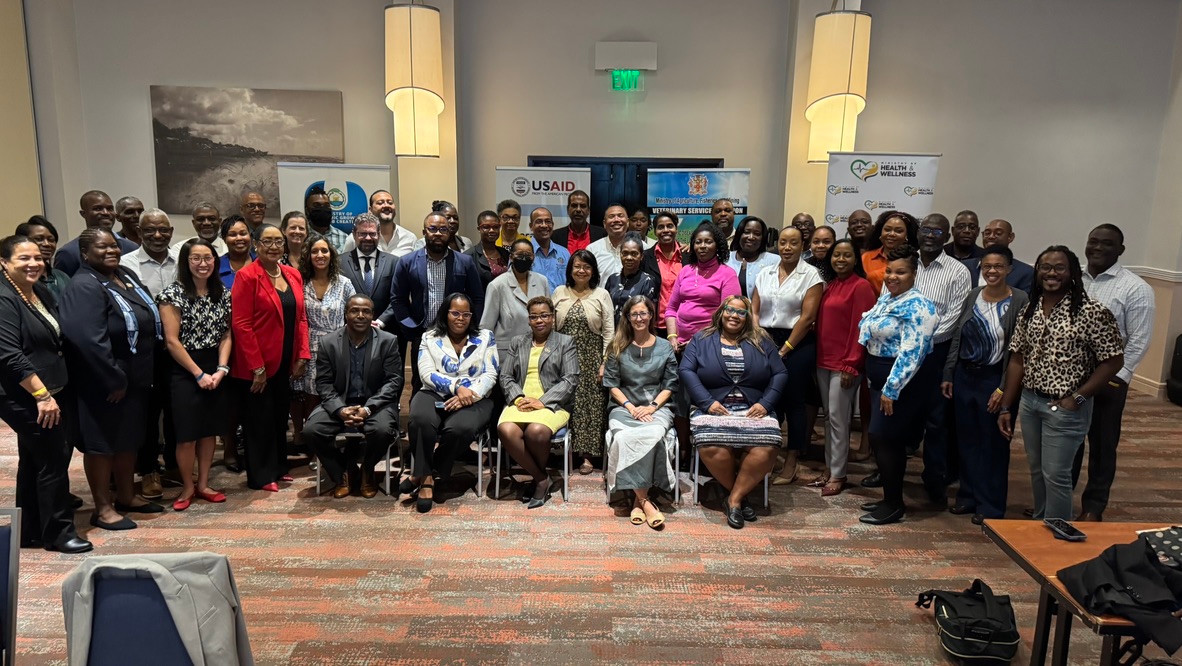
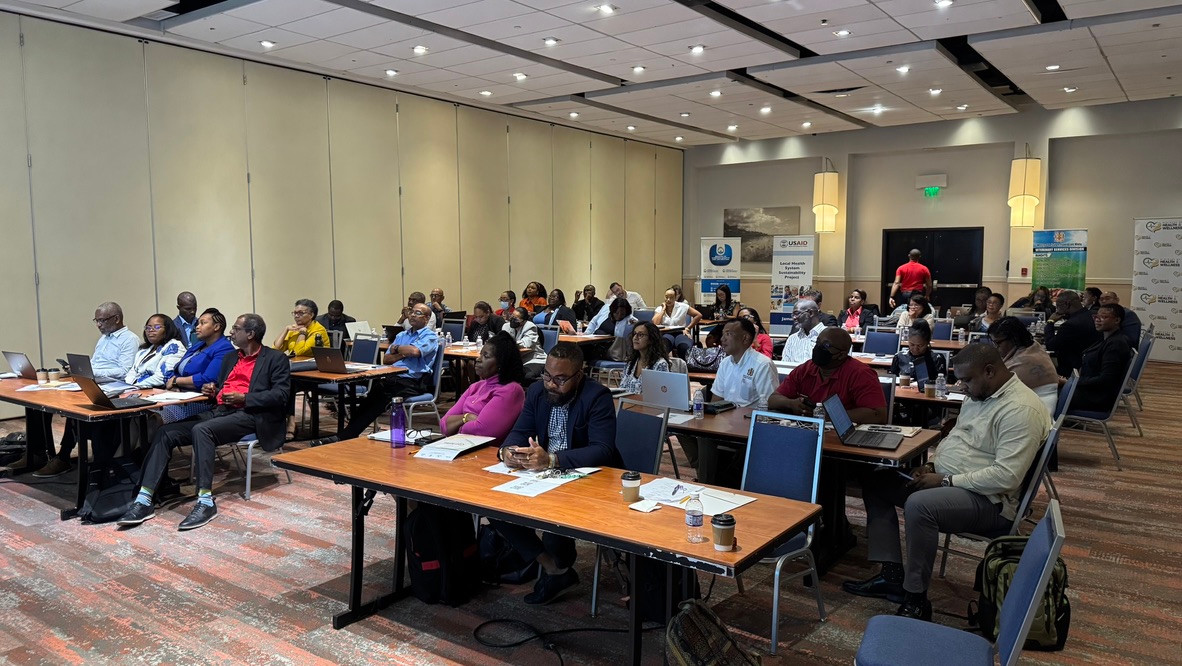
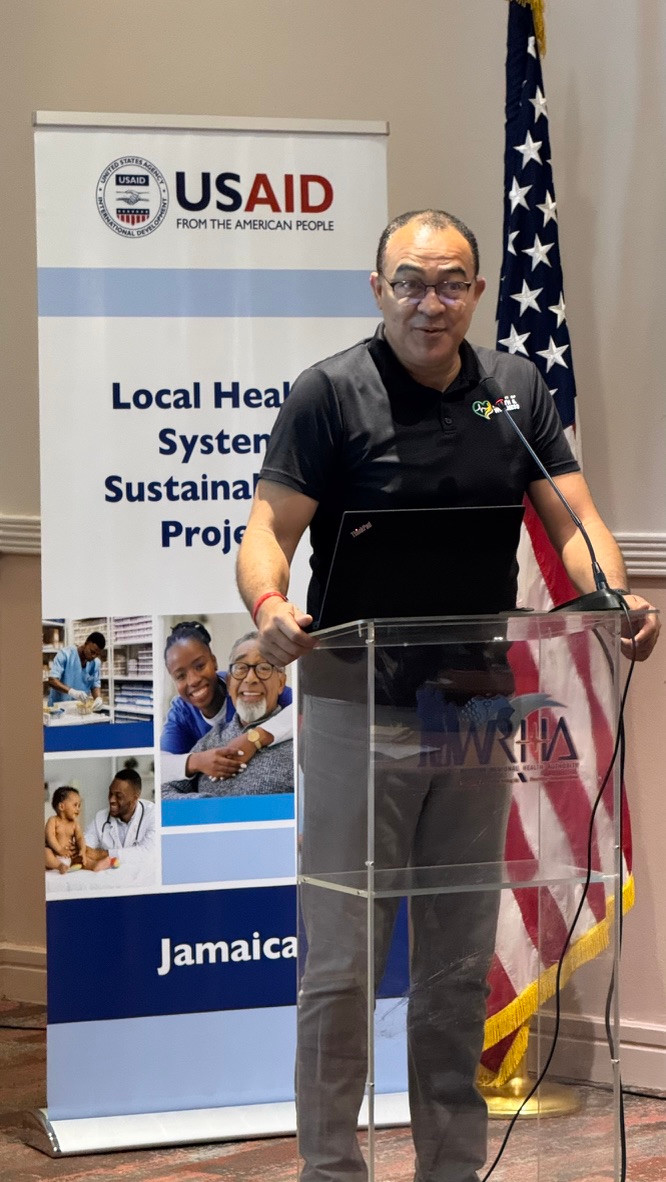
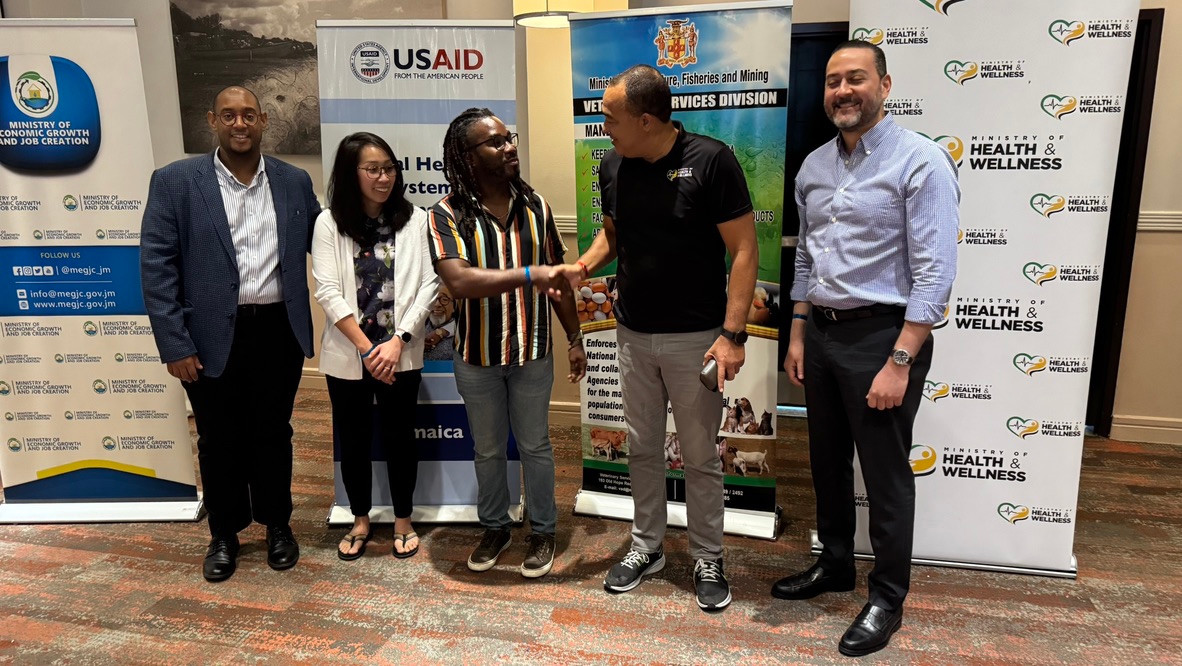
Government officials and partners at the One Health workshop.Workshop participants from government and partner organisations.Multisectoral participation in the One Health discussions.The minister addressing the workshop.Dervin with the minister and workshop participants.
The value he brought
Dervin’s contribution was the ability to connect technical priorities with the people, institutions and processes needed to advance them.
He brought structure to a complex agenda, led coordination across multiple stakeholders and linked engagement to substantive programme outputs. The workshop and assessment served complementary purposes: one captured stakeholder priorities and perspectives; the other examined existing capacities and gaps.
His approach recognised that sustainable coordination depends on government ownership, respect for institutional processes and meaningful participation across sectors.
This experience demonstrates development leadership beyond communications or event delivery: defining an assignment, mobilising partners, overseeing specialist inputs and keeping interconnected activities focused on a shared purpose.
Experience gained through Dervin’s role with Abt Global on the USAID-funded LHSS Project.
Supporting Jamaica’s Pandemic Fund Application
Connecting national priorities, stakeholder inputs and investment planning. Dervin supported stakeholder engagement and programme development for Jamaica’s application, helping translate health-system needs into proposed activities and an investment rationale. The work connected priorities across human, animal and environmental health within the wider LHSS support to the Ministry of Health and Wellness.
Explore the SupportClose the Support
Theme
Pandemic preparedness and health-system resilience
Technical focus
Proposal development and multisectoral coordination
Donor
USAID
Implementing entity
Abt Global · LHSS
Funding opportunity
The Pandemic Fund
The challenge
Developing Jamaica’s Pandemic Fund application required more than assembling a funding proposal. It required bringing together priorities across sectors, identifying practical investments and explaining how those investments would strengthen the country’s preparedness for health emergencies.
The application needed to connect laboratory capacity, surveillance, workforce development and multisectoral coordination within a coherent investment case.
Dervin’s contribution
As part of LHSS’s support to the Ministry of Health and Wellness, Dervin worked on the coordination and programme-development processes underpinning the application.
This included supporting stakeholder engagement and the articulation of priorities across human, animal and environmental health. The work also involved translating discussions about health-system needs into proposed activities and a clearer rationale for investment.
LHSS’s support included strategic and technical guidance on prioritisation, resource mobilisation and costing. Dervin’s contribution sat within this collaborative effort, connecting government engagement with the development of the proposal.
Connecting the proposal with longer-term coordination
The application also provided an opening to advance discussions about One Health in Jamaica. Dervin’s subsequent programme-development work connected the priorities expressed in the application with practical follow-on support through LHSS, including the One Health workshop and assessment.
The value he brought
Dervin helped connect stakeholder priorities, programme design and investment planning. His contribution illustrates the value of development support that understands both the requirements of a funding opportunity and the coordination needed to turn national priorities into a credible programme.
The immediate output was a submitted application. The broader contribution was helping establish a foundation for continued discussion and collaboration around Jamaica’s health-security priorities.
Experience gained through Dervin’s role with Abt Global on the USAID-funded LHSS Project.
Private-Sector Engagement in Jamaica’s COVID-19 Response
Connecting private healthcare capacity with a national public-health priority. Through LHSS, Dervin supported coordination between the Ministry of Health and Wellness and private healthcare providers participating in the vaccination response. His contribution combined assessment of private-sector capacity with communications support to help providers engage in the national effort.
Explore the ProgrammeClose the Programme
Theme
Public health emergency response
Technical focus
Public–private coordination and vaccination delivery
Donor
USAID
Implementing entity
Abt Global · LHSS
The challenge
Jamaica’s COVID-19 vaccination programme required collaboration beyond the public health system. Private healthcare providers offered additional delivery capacity, but their participation needed to connect with government priorities and programme requirements.
The task was to make that partnership practical in a challenging environment that included vaccine hesitancy.
Dervin’s contribution
Dervin supported coordination between the Ministry of Health and Wellness and private healthcare stakeholders as part of LHSS’s contribution to the national vaccination response.
His work included assessing private-sector capacity and developing communications support for engagement in the programme. This combined an understanding of operational needs with the information and relationships required for providers to participate.
At programme level, LHSS provided targeted technical and financial support to nine private healthcare providers participating in the government’s vaccination effort.
Building relationships beyond the immediate response
The work also formed part of a longer institutional relationship between LHSS, the Ministry and USAID. The project’s reporting describes how the trust developed during the COVID-19 response supported its subsequent engagement in global health security.
Dervin’s later One Health work built on this context, extending the focus from an immediate emergency towards longer-term multisectoral coordination.
The value he brought
This experience demonstrates Dervin’s ability to work across public and private institutions, connect available capacity with programme needs and support collaboration during an urgent national response.
It also shows the importance of maintaining relationships beyond individual activities—creating a foundation for continued cooperation as government priorities evolve.
Experience gained through Dervin’s role with Abt Global on the USAID-funded LHSS Project.
Developing an Oncology Framework for Jamaica
Connecting specialist evidence with practical priorities for cancer care. Working with a specialist consultant, Dervin helped shape a framework examining Jamaica’s cancer-care pathway from initial suspicion through diagnosis and treatment. He refined technical evidence on workforce, diagnostic and service capacity into clear findings and recommendations for policymakers.
Explore the ActivityClose the Activity
Theme
Health-system strengthening
Technical focus
Oncology service planning and policy communication
Donor
USAID
Implementing entity
Abt Global · LHSS
Government counterpart
Ministry of Health and Wellness
The challenge
Improving cancer care required looking beyond individual treatments to the wider patient journey—from initial suspicion of cancer through diagnosis, referral and treatment.
The framework needed to examine how workforce shortages, diagnostic capacity, infrastructure, equipment and service organisation affected that journey. It also needed to communicate those issues clearly enough for policymakers to understand where action was required.
Dervin’s contribution
Dervin worked with a specialist consultant on the development of an oncology framework to support the Ministry of Health and Wellness.
He helped shape the framework’s structure and scope, connecting the analysis of cancer-care pathways with the systems and resources needed to improve them. The work covered workforce capacity, laboratory and diagnostic services, hospital capabilities, information systems and access to care.
A central part of his contribution was reviewing and refining technical material so that its meaning was accessible to decision-makers outside the medical profession.
Making technical findings useful for policy
Dervin recognised that a technically detailed document would have limited value if policymakers could not readily understand its implications. His review focused on preserving the substance of the specialist analysis while improving its organisation, explaining medical terminology and making the relationship between service constraints and patient delays clearer.
The completed framework examined the pathway from suspicion to treatment and provided recommendations for increasing service access and capacity.
The value he brought
Dervin connected specialist expertise with the needs of a policy audience. His contribution demonstrates the ability to support complex technical assignments, organise evidence into a coherent framework and make recommendations understandable without losing their substance.
The output was a completed framework to guide improvement efforts—not a claim that the recommended reforms had already been implemented.
Experience gained through Dervin’s role with Abt Global on the USAID-funded LHSS Project.
International Programme Funds
Donor-side programme management, NGO coordination and support for locally led development. At the British High Commission, Dervin managed the programme-fund portfolio and guided local organisations through proposal development, funding requirements and donor reporting. His work connected FCDO priorities with practical support for partners delivering development initiatives.
Explore the ProgrammeClose the Programme
Theme
Civil society & locally led development
Technical focus
Grant management & NGO support
Donor
FCDO
Institution
British High Commission
Dervin’s role
Programme-fund portfolio management
Working on the donor side at the British High Commission, Dervin managed the programme-fund portfolio and coordinated support for local NGOs. He connected FCDO priorities with organisations delivering development work across climate change, education, agriculture, public health, gender and youth.
Supporting NGOs to access funding
Dervin provided technical guidance on funding requirements, proposal development and donor compliance. His role helped local organisations understand what the donor required and strengthen their proposals for support.
Coordinating the funding relationship
His responsibilities combined portfolio and budget oversight, applicant guidance and due diligence, monitoring and donor reporting. This placed him at the connection between the donor’s requirements and the NGOs responsible for implementation.
The work brought together funding administration and practical support for partners: helping organisations navigate the process while maintaining attention to delivery, accountability and the use of programme resources.
The value he brought
During his management of the programme, his guidance helped increase the number of local NGOs receiving FCDO funding from approximately one annually to as many as three per year.
This donor-side experience informs the support DASTPO can offer to both funders and implementing organisations—connecting an understanding of funding requirements with the coordination and guidance local partners need.
Experience gained through Dervin’s management of the British High Commission’s programme-fund portfolio.
The DASTPO approach to development practice
Six connected dots. Development through coordination.
Dervin’s approach connects people, evidence and institutions with practical delivery. The six dots are connected practices, not a rigid sequence: listening and learning continue throughout the work.
People and national ownership at the centre
01 / 06
Listen
Start with people and national priorities.
Dervin begins by listening to government counterparts, communities, NGOs, donors and technical partners. He makes space for different priorities and lived experiences, including the voices that are less likely to shape decisions.
Work with DASTPO Caribbean
Let’s turn your development priority into coordinated, practical action.